Nigerian Igbo
Funeral Ceremony
second burial

Masquerades
What is a masquerade without music, dance, colorful masks and costumes? For the Igbo their second burial masquerades have essential components that are necessary, such as the body concealing costumes, dances, music, song, tradition, myth and the interactions between the masker and the audience. It is necessary for them to have these ceremonies in order for the spirit of the deceased to enter the new realm they will go to next, which is an important part in their lives (as I have mentioned earlier). These masquerades will also allow them to speak with their ancestors.
The Igbo people are known to have the greatest range of artistic styles and because of this it is hard to attribute specific work to a specific area in Igboland. Also, certain things are kept secret, so there really is no way to know about some aspects of this ceremony, unless you are from the Igbo culture from Nigeria.
Ceremonial Masks
When it comes to their own masks, the Igbo people reflect certain complementarities, which oppose beauty with bestiality, feminine with masculine and black with white. They either play a role in the judicial system and/or are used for entertainment purposes. For these Africans, these masks play an essential role in their lives and represent either a deity or spirit. They provide the aesthetic means of addressing universal issues, such as their reality and the cosmos, their relationship with others and coming to terms with death.
This mask (above on the left) is believed to have been carved for funeral purposes. These people, like other cultures around the world such as the Oceanic people, believe that once someone dies, communication from the spirit world is possible through these funeral masks, which are worn by secret society members of the community during these ceremonies. Secret society members are responsible for ensuring that the deceased spirit finds its way to the new spirit world. The bright colors that are displayed on this mask (above on the right) suggest that it is from the southern part of Nigeria rather than the northern part. In the northern part masks are usually painted white.
Igbo masks are used to speak with their ancestral spirits during a masquerade. In his novel "Things Fall Apart" Chinua Achebe mentions that we can see that the Southern Igbo believed that the ancestral spirits and the spiritual world were directly linked to the world of the living. These masks are proof of their belief that their ancestors are still with them, they just happen to be in another world (the spiritual world).
Another tradition in the Igbo culture is that their ancestors watch over them from this spiritual world and must please these ancestors or they will be cursed. These masquerades allow these people to speak with their ancestors using these masks.
Maiden Spirit Mask
Another mask that is used is a Maiden Spirit ‘Agbo mmaung’, which portrays the ideal of all the qualities of a young woman's beauty. This mask is one of two of the most important types of masks. This other type represents the power of man. The maiden spirits are invoked together with other spirits as escorts of the highly represented deceased into this new spirit world. When the mask is being worn, the maiden spirit dancer personifies the ideals of young feminine grace and beauty, which are worn by men wearing elaborate, colorful embellished bodysuits.
This maiden mask is carved with a long thin nose, small mouth, an elaborate hairstyle and either painted or raised patterns. It is painted with red, orange, yellow and black pigments that highlights the carvings in the mask and is featured with a white face, which represents the spirits for these people. As you can see in these pictures below, none of them will look exactly the same, but they all contain the same characteristics such as that white face and the 3 hair crests on top. These crests are a sign of wealth or royalty. Other characteristics in this mask mirror the spiritual traits that Igbo men desire: purity, which is defined in her pale complexion, grace, which is noted in the form of her facial features and in the manner in which the spirit is danced, obedience, good character and generosity.
Ijele mask
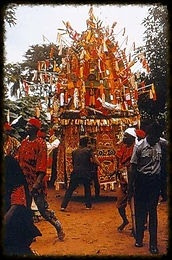
The Ijele Igbo masks are giant, colorful and dramatic which are carried on the dancers head. These are the largest known masks in the history of the world in masking traditions. They can be up to 12-15 feet high decorated with creative colorful cloths, bamboo sticks and canes. Many symbols are embedded throughout the mask. At the top of this enormous mask represents important aspects of community life: man and his activities, the spirit world and the animals and forest.
This Ijele mask is known as a leading spirit (mmuo). It displays patterns on velvet that hang from the bottom of the frame. The designs that you see are known to the Igbo as “Uli" patterns (these symbols are located in the picture below). The cone-cylinder form and the construction of the headdress relates to the Igbo environment in their architectural significance and its image provides a social narrative of Igbo life. The elaborate embellishments and the vivid colors that this mask reflects the resources of them. It is an Igbo rule that masks do not represent SPECIFIC spirits, but rather they dramatize particular attributes of humans, spirits and ancestors. Although some will dramatize the close parallels between the living and the dead, such as the Maiden Spirit mask as it mentions above.
Making the masks
The Igbo’s take these masks very seriously. To them they aren’t just a piece of wood, plastic or any other material that is worn for Halloween. The process in making these masks is taken very seriously as well and done is secrecy either in a bush or an enclosed hut. It is considered an art form in itself. First, the one who is creating the mask selects a certain part of the tree in which that selected part will be used to make this mask. This piece of wood he selects and cuts down is considered to contain spiritual forces. A ritual will then be performed to pacify this spirit.
The artist carving this mask is a professional (and also gets commission for his services) who uses wood, fiber, cloth, raffia, or any other types of costumes for the masked event. He sculpts without any sketches or stencils; he just uses his vision to sculpt it. While carving he will try to keep the beautiful grain this wood has intact as well as keeping it in a traditional style. When the carving is done and this piece has been given a “new life,” he goes about painting it. This is the most outstanding characteristic of all the Igbo masks. These masks will be painted white (meaning purity, beauty, peace and the spirit), camwood red (portrays danger), orange or yellow (representing life) and black or “pot black” (meaning evil and ugliness). This carver/mask creator will place more emphasis on the mask making process than on the finished product which will be presented in the masquerade.
The music and Dance
These ceremonies involve a lot of music and dancing. Special traditional instruments such as the uhie (a big wooden gong) and a Igba (the drum) are used in this dance. This music that is incorporated into the dance has esoteric and mystical meanings.
The Igbo traditional music that is played in this ceremony is played in combination with the Igba (cylindrical drum) which is made from cylindrical wood and animal hyde along with gongs, which can be either metal (Ogene) or wood; either big wooden gongs (Ikoro) or small wooden ones (Okwa). The other instruments are also played in this music include a wooden flute (Oja), a Horn-trumpet (Opi), a calabash (bottle gourd) filed with tiny plant seeds or decorated with cowries (Osha), a clay pot (Odu) and an array of special wood of different lengths from shortest to longest (Xylophones).



As you can see in this death mask it displays colorfulness and mirror embellishments, which distract evil spirits.
In this death mask, you will see it does not have a white face, which means its from the Southern part. Also it shows the enlongated nose some of their death masks are known to have.


Ijele symbol meanings that are displayed in these masks


A close up of the canes, bamboo and symbols that are part of this mask
Notice how massive this Ijele mask really is

This mask depicts a young male ancestral spirit or an animal spirit as you can notice the horns on top.

Igbo maiden masked dancers in their embellished costumes


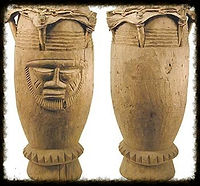


Igbo drums and slit drums, Igba, they use in their ceremonies

Metal gongs, Ogene

Wooden gongs, Ikoro or Okwa


Igbo wooden flute; Oja, horn-trumpet; Opi and calabash.
The other instruments they use.
Funeral Burial dance
Images of a second burial ceremony in action


© 2015 by Larissa Hostetter. Created with Wix.com